How Much Does It Cost to Build an App MVP in 2026 (and How to Spend Less)
Ask for the price of an MVP and you will hear a range so wide it is useless. That spread is not a trick. "MVP" is used for a clickable prototype, for a one-platform app with a login, and for a product that already has payments, an admin panel and a second language. Those are different builds.
This guide explains what you are buying, which decisions raise the cost, and how to spend less without pretending a single figure fits every idea. AirBuild Studio does not publish a fixed app price. An app is quoted to scope, in writing, after a short call.
What an MVP is, and what people pretend it is
An MVP is the smallest version that lets a real user complete one job, so you can learn whether the job matters. It is not a cheap copy of the full product, and it is not a slide deck.
A useful test: name the one action the first version must get right. Book a table. Log a meal. Save an outfit. Send a message to a named person. If you cannot name it, you are not ready to price the app. You are still choosing the product.
Everything else can wait: a social feed, a points system, a desktop dashboard, Android and iOS on day one, a custom illustration on every empty state. Those can be good later. They are expensive now because each one is design, engineering and testing.
What actually moves the price
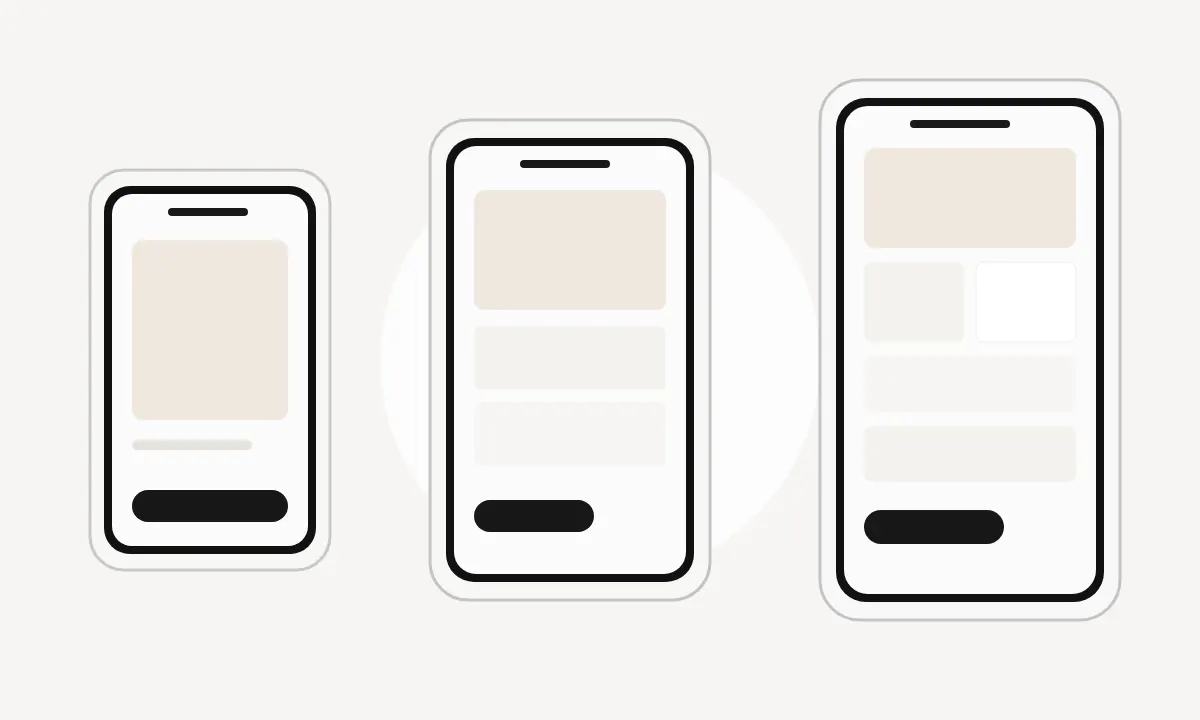
The invoice follows the work, not the ambition in the pitch.
1. One platform or two
iOS and Android are two products that share an idea. Shipping both at once roughly doubles the interface work and the store submission, even when the backend is shared. A focused first version often picks the platform where the first users already are, and adds the other when the flow is proven.
Apple and Google each charge a developer-account fee to submit apps. The current amount is on their own sites. Confirm it before you budget. It is small next to the build, and it is not included in a studio's design fee unless the proposal says so.
2. Accounts, and what they unlock
An app with no login is a brochure. An account adds email or social sign-in, password reset, and a place to store that person's data. That is reasonable for most products. It becomes a larger project when you add teams, roles, or "sign in with the company's single sign-on".
3. Who writes the interface
A small set of screens, drawn once and reused, is cheaper than a new layout for every step. Custom motion and a unique illustration style are real design time. They are worth it when the product is the brand. They are waste when you still do not know if anyone finishes the main task.
4. The backend
Someone has to store data, send email, and keep the app from trusting whatever the phone sends. A simple backend for one job is a normal part of an MVP. A custom recommendation engine, a live map with many drivers, or a video pipeline is not "the same app, just smaller". Say so in the proposal.
5. Payments and subscriptions
Taking money means a provider (their fees, published by them), receipts, failed payments, and a way to turn access off when a subscription lapses. It is ordinary work and it is testable. It should be its own line, not a footnote.
6. An admin, or the lack of one
If you cannot fix a user's mistake without a developer, you will feel it in week two. A plain admin for the few records you own is often cheaper than a month of manual database edits. A full internal tool is a second product. Decide which one you mean.
7. Content you do not have
Empty screens, missing legal pages, and no sample data slow every build. If the studio writes the interface copy, say so. If you write it, the calendar starts when you deliver it, not when you sign.
How to spend less without building a toy
Cutting cost only works if you cut scope, not quality on the one path that matters.
- One job, one platform, one language. Add the rest when someone has completed that job without you in the room.
- Reuse a small screen system. The same button, list and form, repeated, beat ten custom pages.
- Buy the commodity. Email delivery, payments and crash logs already exist as services. Building your own is rarely the MVP.
- Skip the store if a phone-sized website would answer the question. Some ideas need an install, push notifications or a camera in a way a site cannot match. Many "apps" are a logged-in website. A professional website is a different, smaller product. We wrote a separate guide on what a small-business website costs. Our professional websites, which are not apps, start at $900. That number is not an app price.
- Write the out-of-scope list. "Not in this version" is how a fixed price stays fixed.
If a quote is far below the others, ask which of the items above it removed. Cheap and complete is usually incomplete.
What we have actually built
AirBuild Studio designs and builds its own products as well as client work. On the app side, that includes NutrAge, Mind Shift and Veste: our products, shown as product previews on the studio site, not as client case studies and not with invented download or revenue figures. Clyent is a separate product of ours, for commercial follow-up, at clyent.io. None of that is a promise that your app will take the same time. It is the reason a conversation about scope can be specific.
We do not publish other people's results, and we will not invent them.
Questions to ask before you sign
Is the price fixed, and what is the screen list?
You want the screens, the platforms, who writes the copy, and how many rounds of revision. "MVP" alone is not a scope.
When does the clock start?
Usually when the account setup, content and decisions you owe are in. If the proposal is silent, ask.
Who owns the code, the store accounts and the data?
The Apple and Google accounts should be yours. The repository and the hosting logins should be in the proposal. A build you cannot open is not an asset.
What does the first year cost besides the build?
Developer fees, hosting, email, error monitoring, and a few hours of changes. Ask for that total. The build is the first line, not the only one.
What will you learn, and how will you see it?
Name the action you will count: completed bookings, saved items, messages sent. If the MVP cannot show that, it is a demo, not a test.
How we quote an MVP
On mobile apps we do not print a package price. An app is a custom quote after a call: fixed scope, timeline and price in the proposal, before work starts. Payments and handover are in that same document.
If the honest first version is a website with one clear action, we will say so. Websites in Spain have a published starting price; apps do not. If you later need an assistant on top of the product, that is AI services, also scoped separately, not folded into the MVP by default.
Contact us with the one job the app must do, who the user is, and whether you need iOS, Android, or both.
TL;DR
- An MVP price is wide because the word covers a prototype and a small product. Price the screen list, not the label.
- One platform, one job and bought services (payments, email) are the usual ways to spend less.
- AirBuild Studio quotes apps to scope. We do not publish a universal MVP fee, and we do not invent results for products we have shipped.