AI Receptionist for Small Businesses: What It Can and Can't Do in 2026
The promise is always the same: the phone is answered, the booking is made, and nobody on your team was at the desk. Sometimes that is true. Often the tool only takes a message, and a person still types it into the calendar the next morning. The difference is the whole purchase.
This guide is for a small business deciding whether an AI receptionist is worth it in 2026: what it can safely do, what it should refuse, and what to read before you pay. It is not a ranking of vendors and it does not invent prices. Sellers publish their own. Ours, when we build one, is a custom quote.
If you run a clinic in Spain, we wrote a more specific guide in Spanish: recepcionista con IA para clínicas. The caution there about health data applies even more strictly than the general notes below.
What it should do, and what it should not
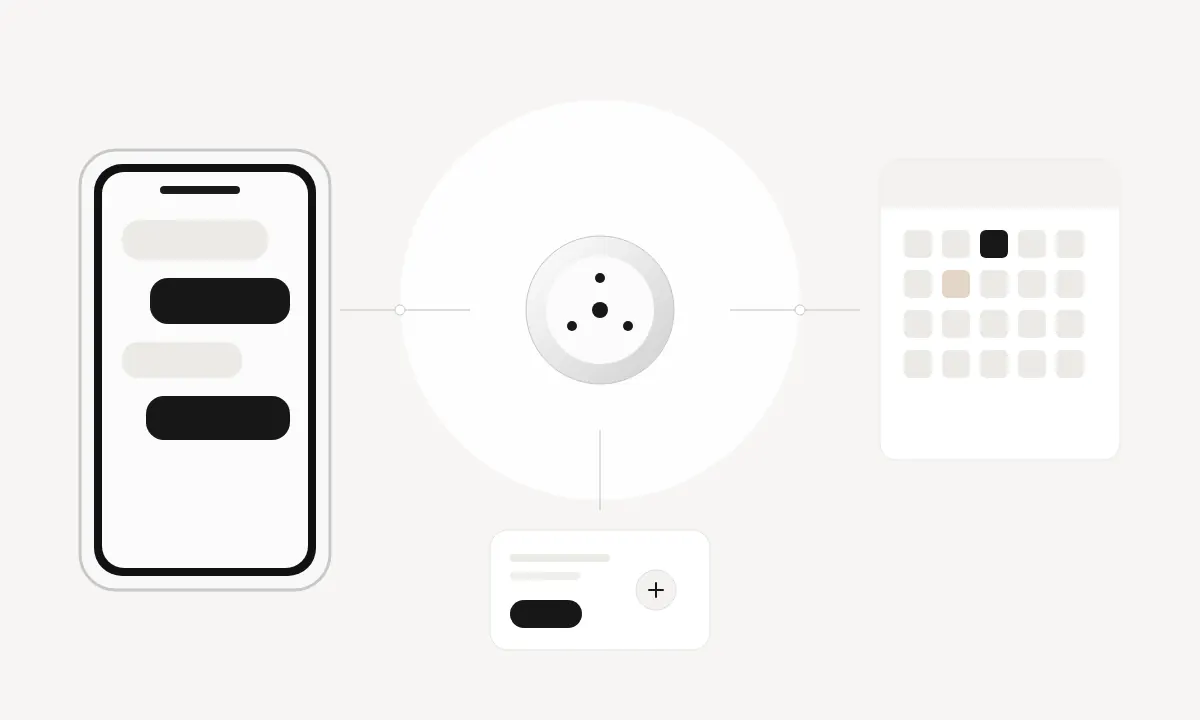
A useful receptionist is a system on your website, your phone line or a messaging app that can:
- Answer the questions you have already written down: hours, address, what you offer, how to get there, whether you take a particular kind of booking.
- Offer, move and cancel a time on the calendar you actually use, not on a demo calendar.
- Send a confirmation or a reminder, so fewer people simply forget.
- Hand the conversation to a person when the request is outside that list.
It should not diagnose, quote a legal outcome, approve a loan, or invent a policy you did not give it. If the business is regulated, "it sounded confident" is not a defence. The safe rule is the one we use with clinics: anything that is advice stays with a person. The assistant books and informs. It does not decide.
Tell people they are talking to a system. In the EU, the AI Act's transparency rule (Article 50) requires that disclosure unless it is already obvious. A first line is enough: "Hi, I'm the virtual assistant for [business]." Even where that regulation does not apply, the sentence costs nothing and prevents a bad surprise.
Three products hiding under one name
- Tied to your real calendar. It reads openings and writes the booking back. This is the version that saves labour.
- A polished answering machine. It chats well and emails you a transcript. Someone still updates the diary. Budget for that time or you have only moved the queue.
- A stack you assemble. Voice, model and telephony from specialist providers, with a flow built for your tools. This fits when a closed product cannot see your calendar or your rules. It is a project, not a subscription you switch on tonight.
Vendors in each group publish prices on their own sites, usually per location, per calendar or per minute. Those numbers move. Read the current page, and read what is extra: voice minutes, messaging fees, setup, and any minimum term. We will not repeat a figure here that would be stale next quarter.
What to check before you pay
Does it write to your calendar?
Ask for a trial on your diary, not a recording. Which software does it support, and what happens when two people book the last slot? If the answer is "we email you", you still have a receptionist. You have added a typist.
Where does the conversation go?
A booking can include a name, a phone number and the reason for the visit. If you have customers in the EU or the UK, that is personal data, and the reason for a visit is sometimes sensitive. You want a written processing agreement with the supplier, and a plain answer to where the call, the transcript, the model and the storage sit. "We are compliant" is not that answer.
If the business is a clinic, a law firm or anything similar, do not let the assistant collect the story of the case in an open chat. Point people to a person. We cover the clinic version in the Spanish guide linked above.
What does the monthly price leave out?
Typical gaps, described without inventing a tariff:
- Minutes or messages above the plan.
- The messaging channel's own fee. WhatsApp's business platform, for example, is priced by its operator, not by the studio that connects it. See our Spanish note on automating WhatsApp if that is the channel.
- Extra calendars, locations or staff.
- A setup fee, and whether you can leave.
Can you see if it works?
You need counts you can check: conversations, bookings created, handoffs, and conversations that ended without a result. Without those, you cannot tell a useful assistant from an expensive voicemail.
A website still comes first
Many small businesses do not lack a robot. They lack a page that states the offer and a button that starts a booking. An assistant on top of a confusing site answers the wrong questions faster.
A professional website is a separate, smaller product. We explain website ranges in how much a small-business website costs. Our published professional websites start at $900. That is not the price of an assistant. The assistant is quoted on its own.
If the site and the booking path are clear, a closed receptionist product is often the faster buy. A custom one is justified when your tools do not connect, when several locations follow different rules, or when you need the assistant to sit inside a system you already run.
Questions people ask
Will it replace my front desk?
It replaces the repetitive part: hours, directions, and a booking that fits a rule you wrote. It does not replace judgment, complaints, or anything you would not let a new hire say unsupervised.
Can it use my existing number?
Sometimes, depending on the phone provider and the channel. Get that in writing. A new number that customers never learn is a quiet failure.
Is a cheap plan a false economy?
It is if the plan does not touch your calendar or hides the overage. Compare a year of the real bill, not the hero price.
Do I have to say it is an AI?
Where the EU AI Act applies, yes, unless it is already obvious. Elsewhere it is still the cleaner choice. Hiding it does not make the answers more trustworthy.
How we approach it at AirBuild Studio
On AI services we do not sell a boxed receptionist with a public tariff. The work is a custom quote:
- We start with the website and a booking path a person can see. That often removes half the "we need an AI" brief.
- If an assistant still helps, we either help you judge a product you can subscribe to, or we design a flow on your calendar with a written list of what is always handed to a person.
- Scope, tools and the human check are agreed before anything goes live.
We have built our own AI products, including Clyent for commercial follow-up. That is our product, not a client trophy and not a claim about your call volume.
Get in touch and tell us which questions you answer ten times a day, and which calendar you use.
TL;DR
- An AI receptionist should answer known questions, write real bookings and hand the rest to a person. It should not give advice.
- Compare products on calendar integration, the yearly bill and whether people are told it is a system.
- AirBuild Studio quotes this work to scope. A website has a published starting price in Spain. An assistant does not.